Karate vs Kickboxing: What’s the Difference?
When people start exploring martial arts, one of the most common questions is: Karate or Kickboxing—which one should I choose?
Both are exciting and effective martial arts disciplines, and both can improve physical fitness, coordination, confidence, and striking ability. However, they have different histories, training methods, techniques, rules, and philosophies.
Understanding the difference between Karate and Kickboxing can help beginners choose a training style that matches their goals.
What Is Karate?
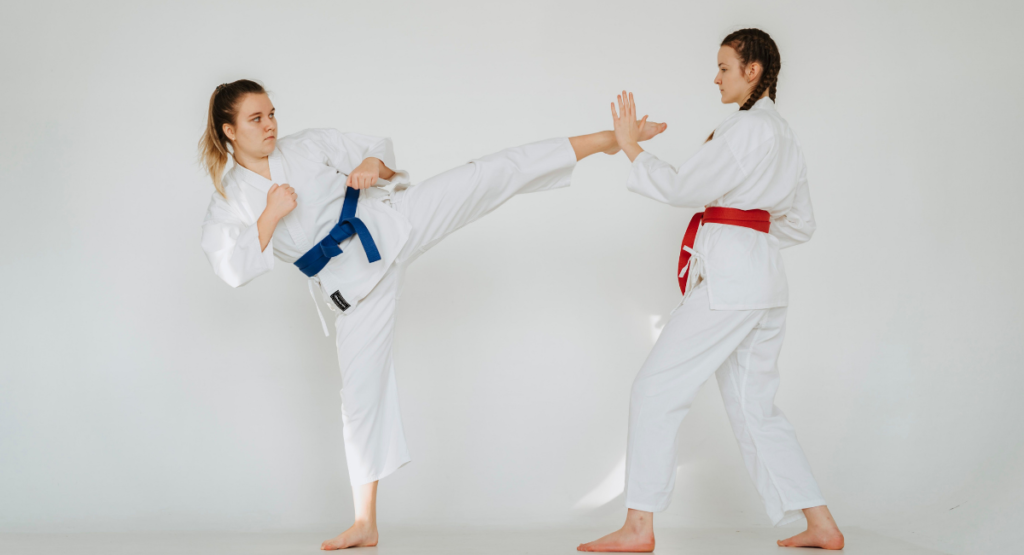
Karate is a traditional martial art that originated in the Ryukyu Kingdom, particularly Okinawa, and later developed into different styles and systems.
Modern Karate includes a combination of:
- Punches
- Kicks
- Blocks
- Stances
- Footwork
- Forms or kata
- Partner drills
- Controlled sparring
- Martial arts etiquette and discipline
Different Karate styles can have different approaches. Shotokan Karate, for example, is known for strong stances, powerful techniques, structured movements, and traditional training methods.
Karate training often places significant emphasis on technique, precision, discipline, timing, and control.
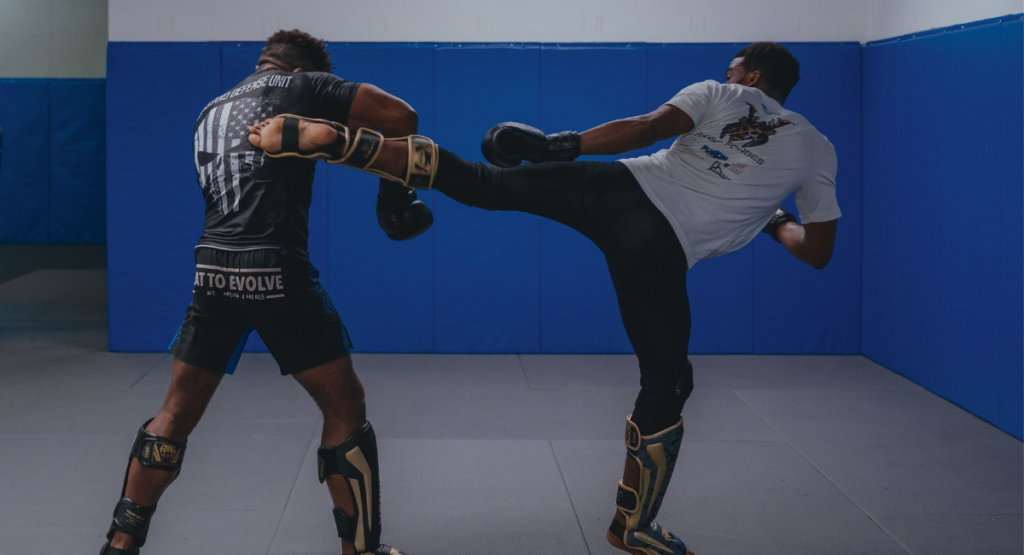
Kickboxing is a striking-based combat sport and martial arts discipline that combines punching techniques with kicking techniques.
What Is Kickboxing?
Depending on the ruleset or style, Kickboxing training may involve:
- Punches
- Kicks
- Footwork
- Combinations
- Defensive movements
- Pad work
- Heavy-bag training
- Conditioning
- Controlled sparring
Kickboxing generally has a strong emphasis on striking combinations, movement, conditioning, timing, and practical application within its ruleset.
Karate vs Kickboxing: Key Differences
While both disciplines involve punches and kicks, their training approaches can be quite different.
| Feature | Karate | Kickboxing |
|---|---|---|
| Main emphasis | Technique, discipline, precision and control | Striking combinations, movement and conditioning |
| Kicks | Wide variety depending on style | Commonly integrated with punching combinations |
| Punches | Strong emphasis on technique and form | Frequently used in combinations |
| Forms | Many Karate styles include kata | Generally not a central component |
| Stances | Often more structured depending on style | Typically more mobile |
| Training | Technique, kata, drills, sparring | Pad work, bag work, combinations, conditioning, sparring |
| Competition | Depends on Karate ruleset | Depends on Kickboxing ruleset |
| Traditional etiquette | Strong emphasis in traditional Karate | Varies by gym and style |
| Fitness | Excellent | Excellent |
| Self-defense | Depends on curriculum and instructor | Depends on curriculum and instructor |
The exact differences can vary considerably between schools and rulesets, so the academy and instructor are important factors.
Karate Techniques vs Kickboxing Techniques
Karate Techniques
Karate students commonly learn techniques such as:
- Straight punches
- Reverse punches
- Front kicks
- Side kicks
- Roundhouse kicks
- Blocks
- Elbows or other techniques in certain systems
- Stances and footwork
- Kata
The exact techniques taught depend on the Karate style.
Traditional training often focuses on performing techniques with proper form, balance, speed, control, and precision.
Kickboxing Techniques
Kickboxing commonly emphasizes combinations involving:
- Jab
- Cross
- Hooks
- Uppercuts
- Front kicks
- Round kicks
- Knee techniques in some rulesets
- Defensive movement
- Angles and footwork
Training often involves combining several techniques into fluid striking combinations.
For example:
Jab → Cross → Hook → Round Kick
The precise techniques allowed depend on the particular Kickboxing ruleset.
Which Is Better for Fitness: Karate or Kickboxing?
Both can provide excellent physical exercise.
Karate Fitness
Karate training can improve:
- Flexibility
- Balance
- Coordination
- Speed
- Agility
- Strength
- Body control
Kata, drills, footwork, and partner training can all contribute to physical conditioning.
Kickboxing Fitness
Kickboxing can provide particularly demanding cardiovascular and conditioning workouts.
Training may include:
- Heavy-bag rounds
- Pad work
- Footwork drills
- Striking combinations
- Bodyweight exercises
- Circuit training
- Controlled sparring
If your primary goal is a high-energy striking workout, Kickboxing may appeal to you. If you want a combination of martial arts technique, structured practice, and traditional training, Karate may be a better fit.
Which Is Better for Self-Defense?
This question does not have a simple one-word answer.
The quality of training matters enormously.
Karate can teach striking techniques, movement, defensive techniques, distance management, awareness, and control. Kickboxing can develop striking ability, footwork, timing, defensive movement, and the ability to perform combinations under pressure.
However, real-world self-defense involves much more than fighting techniques.
Effective self-defense education should also include:
- Situational awareness
- Avoiding unnecessary confrontation
- Verbal de-escalation
- Understanding personal boundaries
- Knowing when to escape
- Seeking help
- Appropriate physical responses when necessary
A martial arts academy that teaches responsibility and safety is therefore an important consideration.
Karate vs Kickboxing for Beginners
Both Karate and Kickboxing can be suitable for beginners.
Karate may be a good choice if you want:
- Traditional martial arts training
- Structured progression
- Karate forms and techniques
- Discipline and etiquette
- Technical precision
- A long-term martial arts journey
- A combination of physical and mental training
Kickboxing may be a good choice if you want:
- Dynamic striking training
- Punch-and-kick combinations
- Pad and bag work
- High-energy workouts
- Cardiovascular conditioning
- Practical striking drills
- Controlled sparring
Ultimately, the best choice is the one you enjoy enough to practice consistently.
Karate vs Kickboxing for Kids
Both disciplines can be adapted for children when taught by qualified instructors.
For children, the emphasis should be on:
- Safety
- Discipline
- Coordination
- Fitness
- Confidence
- Focus
- Respect
- Age-appropriate techniques
Children do not need to train like adults.
A good children’s program should adjust the intensity and complexity of training according to age and physical development.
Karate may appeal to children who enjoy structured learning, traditional martial arts, forms, and belt progression. Kickboxing may appeal to children who enjoy energetic striking drills and fitness-based activities.
Karate vs Kickboxing: Which One Should You Choose?
The answer depends on your personal goals.
Choose Karate if you are interested in:
Traditional martial arts + discipline + technique + kata + structured progression
Choose Kickboxing if you are interested in:
Striking + combinations + conditioning + movement + dynamic training
And there is another important point:
You don’t necessarily have to choose only one.
Cross-training in different martial arts can expose students to different approaches to movement, striking, conditioning, and combat sports.
Can Karate and Kickboxing Be Trained Together?
Yes, many martial artists eventually explore more than one discipline.
Karate can provide a strong technical foundation in movement, striking, distance, timing, and body mechanics.
Kickboxing can add extensive combination work, conditioning, pad work, and dynamic striking practice.
Training in both can provide a broader martial arts experience, provided the student has enough time to train properly and does not sacrifice quality for quantity.
How to Choose the Right Martial Arts Academy
Whether you choose Karate or Kickboxing, selecting the right academy is important.
Look for:
Experienced Instructors
An instructor should understand the techniques they teach and know how to train beginners safely.
Safe Training Environment
The academy should maintain appropriate safety standards, equipment, supervision, and training practices.
Structured Curriculum
Students should be able to understand what they are learning and how they can progress.
Positive Training Culture
Good martial arts training should develop discipline and confidence without promoting unnecessary aggression.
Training Appropriate to Your Level
Beginners should be introduced to techniques gradually rather than being pushed immediately into advanced or intense training.
Karate and Kickboxing Training in Nahan
If you are searching for Karate classes in Nahan or Kickboxing in Nahan, choosing an academy that offers structured training in a safe and disciplined environment can make a significant difference.
WarTime Combat System (WCS), Nahan, has been providing martial arts training since 2006. The academy offers training in disciplines including Shotokan Karate, Pencak Silat, Kickboxing, and Boxing.
This gives students the opportunity to explore different martial arts disciplines according to their interests, age, ability, and training goals.
Whether your goal is fitness, martial arts development, competition, self-defense awareness, or simply learning a new skill, consistent training and good instruction are more important than choosing a style based only on its name.
Frequently Asked Questions
Is Karate harder than Kickboxing?
Neither is automatically harder. The difficulty depends on the student’s goals, training level, instructor, and program. Both require regular practice and physical effort.
Is Kickboxing better than Karate?
Not necessarily. Kickboxing and Karate have different approaches. The better option depends on what you want to achieve through martial arts.
Can children learn both Karate and Kickboxing?
Yes, children can potentially train in both, provided the programs are age-appropriate and the overall training load is suitable.
Which is better for beginners?
Both can be excellent for beginners. The most important factors are the quality of instruction, safety, structured progression, and whether you enjoy the training.
Can Karate improve fitness?
Yes. Karate training can involve physical conditioning, kicking, punching, footwork, flexibility, balance, coordination, and agility exercises.
Can Kickboxing be used for self-defense?
Kickboxing develops striking, movement, timing, and defensive skills. However, real-world self-defense also requires awareness, avoidance, de-escalation, and knowing when to escape or seek help.
Final Thoughts
The Karate vs Kickboxing debate does not have a universal winner.
Karate offers a structured martial arts journey emphasizing technique, discipline, precision, control, and—depending on the style—traditional forms and etiquette.
Kickboxing offers dynamic striking training with an emphasis on combinations, movement, conditioning, timing, and controlled application within its ruleset.
Both can improve fitness, coordination, confidence, and martial arts skills.
The best martial art is ultimately the one that matches your goals, keeps you motivated, and is taught safely by a qualified instructor.
If you are in Nahan and considering starting martial arts, exploring both Karate and Kickboxing can help you discover which training style suits you best.